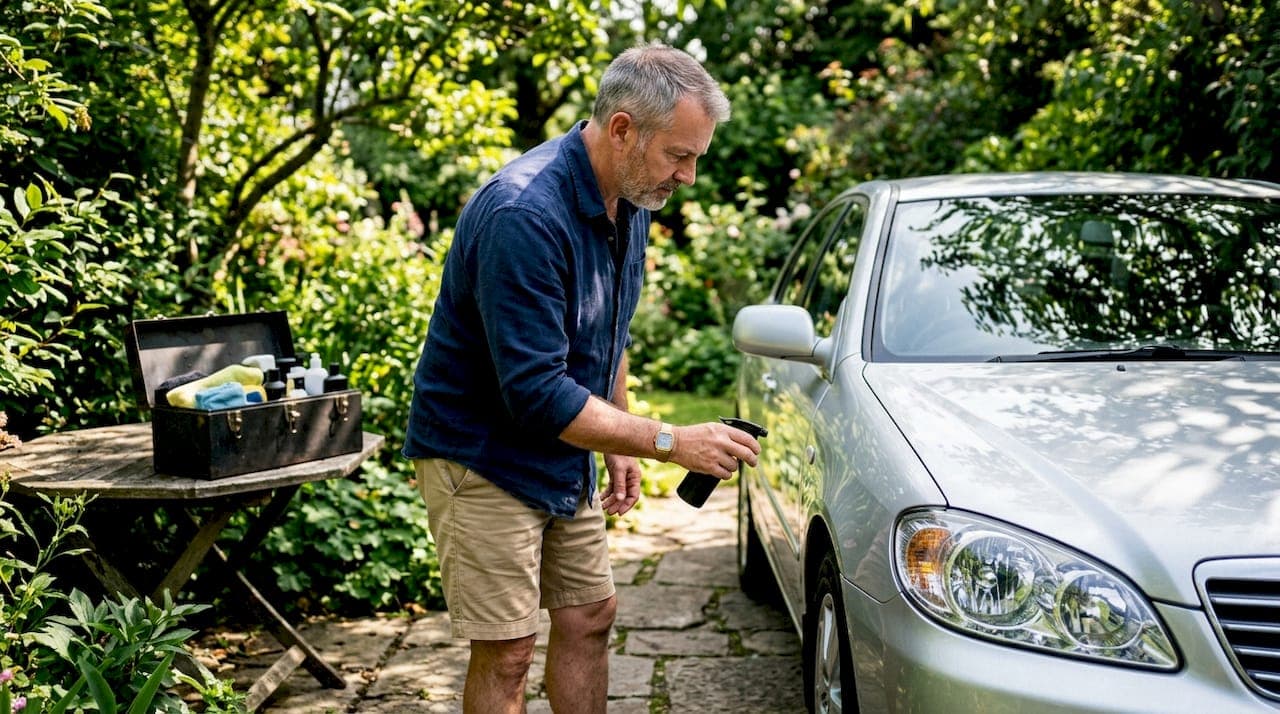
UV protection for headlights is a specialized UV-blocking sealant or coating that shields polycarbonate lenses from ultraviolet rays, preventing the oxidation, yellowing, and hazing that rob your car of both looks and safety. Australia's intense sun makes this more urgent than in most other markets. Oxidized lenses can reduce light output by 20–40%, which means your headlights may be pushing out a fraction of the brightness they were designed to deliver. The right UV coating for headlights stops that degradation before it starts, or locks in the results after a restoration.
How UV rays damage headlight lenses
Polycarbonate is the standard material for modern headlight lenses. It is lightweight, impact-resistant, and optically clear when new. Every polycarbonate lens leaves the factory with a thin UV-inhibiting layer baked into the surface. That factory coating is the only thing standing between your lens and the sun.
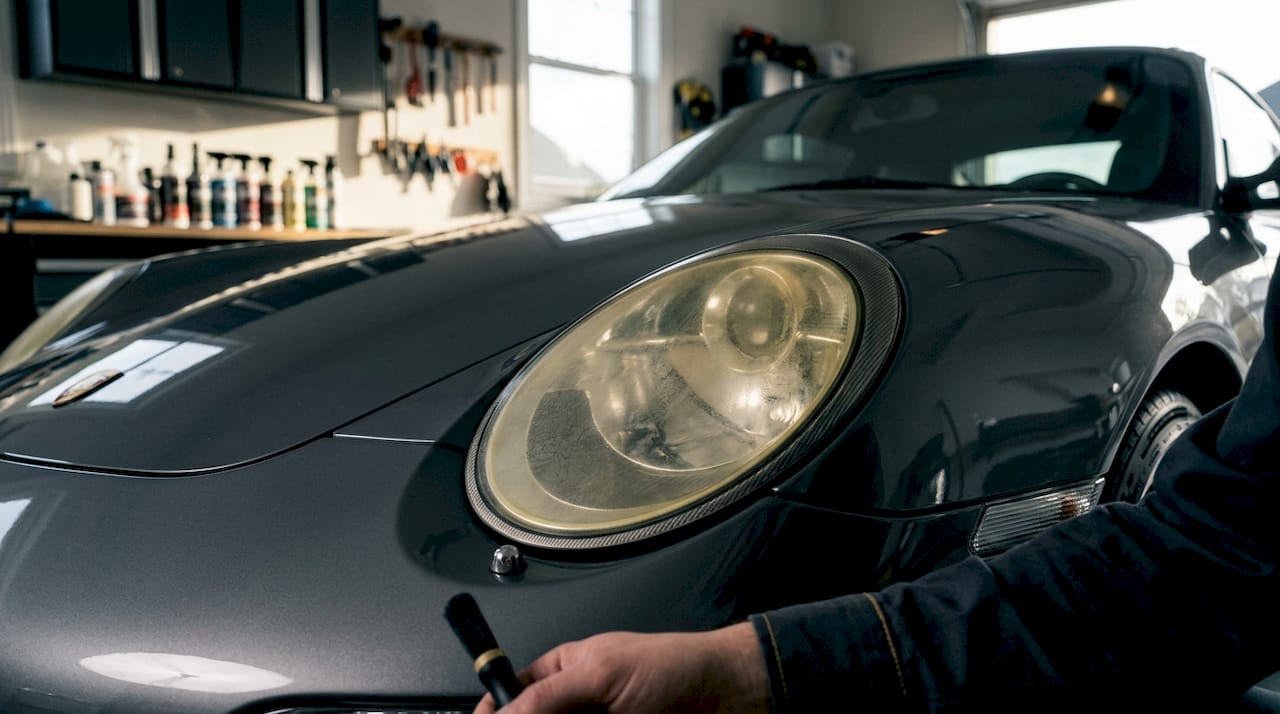
UV exposure breaks down that factory layer through a process called photo-oxidation. Oxygen molecules react with the degraded surface, forming a chalky, yellowed layer that scatters light instead of transmitting it. The result is hazing, reduced beam focus, and glare that affects both you and oncoming drivers.
The damage compounds over time, and several factors speed it up:
- Direct sun exposure. Cars parked outdoors in Queensland or Western Australia degrade faster than those garaged in cooler, shadier climates.
- Heat cycles. Repeated heating and cooling causes the polycarbonate surface to expand and contract, accelerating coating breakdown.
- Road chemicals. Bug splatter, road salt, and cleaning solvents strip residual UV protection faster than UV alone.
- Lack of maintenance. Skipping regular washing lets contaminants sit on the lens surface and accelerate oxidation.
AAA research confirms that degraded lenses provide significantly reduced effective light, creating real safety risks at night. Reduced beam output means shorter reaction distances, particularly on unlit rural roads where Australian drivers spend a significant amount of time.
What types of UV coating for headlights are available?
Three main product categories cover the market for headlight UV protection. Each differs in how it bonds to the lens, how long it lasts, and how much work it takes to apply correctly.
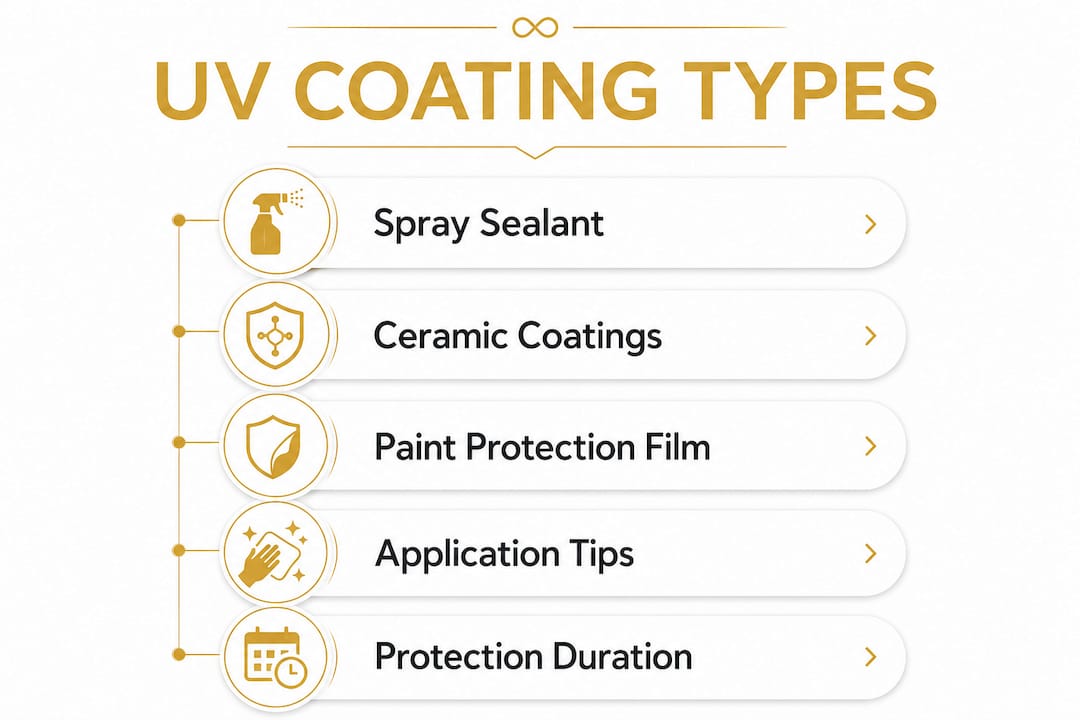
UV-blocking clear coats and sealants are the most common finishing step after a headlight restoration. They sit on top of the polycarbonate surface and form a sacrificial UV-absorbing layer. Quality varies widely across this category. Entry-level spray sealants are easy to apply but wear off within a few months. Professional-grade formulas last considerably longer and provide better optical clarity.
Ceramic-based coatings represent a step-up in both chemistry and durability. Ceramic coatings chemically bond to the plastic surface, filling microscopic pores and creating a UV-resistant, water-repellent barrier. Unlike wax, ceramic coatings do not simply sit on the surface. They become part of it. Professional-grade ceramic coatings provide UV protection for up to 12 months under typical conditions.
Paint protection film (PPF) is a physical barrier, not a chemical one. A thin, self-healing film is cut to fit the lens and applied over the surface. PPF blocks UV rays mechanically and resists stone chips and abrasion. PPF lasts 3 to 7 years, making it the longest-lasting option. The trade-off is cost and installation complexity, which typically requires professional fitting.
| Product type | UV protection duration | Application difficulty | Relative cost |
|---|---|---|---|
| Spray sealant | 2–4 months | Easy (DIY) | Low |
| Professional clear coat | 6–12 months | Moderate | Medium |
| Ceramic coating | Up to 12 months | Moderate to high | Medium to high |
| Paint protection film (PPF) | 3–7 years | High (professional) | High |
Pro Tip: If you are restoring headlights yourself, always finish with a dedicated UV-blocking clear coat, not a generic car wax. Wax contains no UV absorbers and will not stop re-oxidation.
Why UV sealant after restoration is non-negotiable
Polishing a headlight removes the old, degraded surface layer. That process works. The lens comes out clear. The problem is that polishing also strips away whatever UV protection remained, leaving raw polycarbonate fully exposed to the sun. Without a protective sealant, restored headlights start re-oxidizing within 4 to 6 weeks.
That timeline surprises most car owners. They polish the lens, admire the result, and assume the job is done. Six weeks later, the haze is back. The polishing was not the problem. Skipping the sealant was.
Common mistakes that lead to premature oxidation returning:
- Using generic car wax as a sealant. Wax improves gloss but contains no UV-blocking chemistry. It offers no meaningful protection against photo-oxidation.
- Applying sealant to a dirty or damp surface. Contamination under the coating prevents proper bonding and creates weak spots that fail early.
- Skipping curing time. Proper curing protocols require no moisture for 4 hours after application and no washing for up to 7 days. Rushing this step undermines the entire coating.
- Using household methods as a substitute. Toothpaste and mild abrasives remove surface haze temporarily but contain no UV protection. Yellowing returns within weeks.
- Assuming one application lasts forever. UV protection lifespan varies based on climate, parking habits, and product quality. No single timeline fits every vehicle.
Applying a UV-blocking clear coat after polishing is the most critical step in headlight restoration. Skipping it turns a $30 restoration into a job you repeat every two months.
Pro Tip: Set a calendar reminder to inspect your headlights every 6 months. If you notice early hazing or a slight yellow tint forming, reapply your UV sealant before oxidation takes hold. Catching it early costs minutes. Ignoring it costs a full restoration.
How to apply UV protection for headlights correctly
Getting the application right matters as much as choosing the right product. A quality ceramic coating applied poorly will underperform a mid-range sealant applied correctly.
Follow these steps for the best result:
- Clean the lens thoroughly. Remove all dirt, grease, and old wax before starting. Any contamination trapped under the coating will cause adhesion failure.
- Polish before sealing. If the lens shows any yellowing or hazing, polish it first. Applying UV protection over an already-degraded surface seals in the damage without fixing it.
- Work in the right conditions. Apply coatings in shade, with ambient temperatures between 50°F and 85°F. Direct sunlight causes the product to cure too fast, leaving streaks and uneven coverage.
- Apply in thin, even layers. Thick application does not improve protection. It creates runs, uneven curing, and a cloudy finish. Two thin coats outperform one heavy one.
- Allow full curing time. Lenses may appear cloudy until the UV-blocking clear coat fully cures and chemically eliminates the haze. Do not judge the result before curing is complete.
- Avoid washing for up to 7 days. Water contact during the curing window disrupts the chemical bonding process and weakens the finished coating.
- Park under cover when possible. Covered parking dramatically extends the life of any UV coating. Even a carport makes a measurable difference compared to full-sun street parking.
High-quality UV-resistant coatings are not a luxury. Modern OEM headlights cost hundreds to thousands of dollars to replace. A $30–$80 coating that extends lens life by 12 months or more is straightforward cost-effective maintenance.
Key Takeaways
UV protection for headlights is the single most important step after restoration, and skipping it guarantees that oxidation returns within weeks.
| Point | Details |
|---|---|
| UV damage is chemical | Photo-oxidation breaks down polycarbonate lenses, reducing light output by 20–40%. |
| Sealant is mandatory post-polish | Without a UV sealant, restored headlights re-oxidize within 4 to 6 weeks. |
| Product type determines longevity | Spray sealants last 2–4 months; ceramic coatings last up to 12 months; PPF lasts 3–7 years. |
| Curing time is non-negotiable | Avoid moisture for 4 hours and washing for up to 7 days after application. |
| Climate affects reapplication frequency | Australian sun and outdoor parking accelerate UV coating breakdown, requiring more frequent maintenance. |
The uncomfortable truth about headlight protection most owners miss
I have looked at a lot of restored headlights over the years, and the pattern is consistent. The restoration itself is rarely the problem. The failure almost always happens in the 10 minutes after the polishing stops.
Car owners see a clear lens and call it done. They skip the UV sealant because the lens already looks good. Three months later they are back to square one, wondering why the restoration did not hold. The lens did not fail. The protection was never applied.
The other thing I see constantly is people treating all sealants as equal. A $5 spray from a discount store and a professional-grade ceramic coating are not the same product. The chemistry is different, the bonding mechanism is different, and the lifespan is completely different. Ceramic coatings bond to the polycarbonate at a molecular level. Spray sealants sit on top and wash away. That distinction matters enormously in a country like Australia, where UV index readings regularly hit extreme levels.
My honest recommendation for most car owners is a professional-grade wipe-on coating that includes genuine UV blockers, applied correctly after a proper polish. PPF is worth considering if you drive a newer vehicle with expensive OEM headlights and park outdoors year-round. For everyone else, a quality ceramic-based sealant applied twice a year is the most practical and cost-effective approach.
The safety angle is the one that gets overlooked most often. Headlights are not a cosmetic feature. They are the reason you can see a kangaroo on a dark highway before it is too late. Keeping them clear is not optional maintenance.
— Bilo
Refinity WipeClear: professional headlight protection made simple
Car owners who want professional results without professional complexity now have a practical option. Refinitycoatings developed WipeClear specifically for the Australian market, where UV intensity makes headlight degradation faster and more severe than in most other countries.

WipeClear is an Australian-made, wipe-on coating that restores headlights to crystal clarity and delivers over 12 months of UV protection. No power tools, no complex setup, and no lengthy process. The self-leveling formula applies in minutes and bonds directly to polycarbonate, forming a durable UV-blocking layer that holds up against harsh sun and outdoor parking. For car owners who want to protect their investment and keep their headlights performing at full brightness, WipeClear by Refinitycoatings is worth a close look.
FAQ
What is UV protection for headlights?
UV protection for headlights is a specialized coating or sealant that blocks ultraviolet rays from degrading polycarbonate lenses. It prevents the oxidation and yellowing that reduce light output and compromise nighttime visibility.
How long does headlight UV protection last?
Duration depends on the product type and local conditions. Spray sealants last 2–4 months, professional ceramic coatings last up to 12 months, and paint protection film lasts 3–7 years. Australian UV intensity and outdoor parking shorten these timelines.
Do I need UV protection after polishing my headlights?
Yes. Polishing removes the old UV layer along with the oxidation, leaving raw polycarbonate fully exposed. Without a UV sealant, re-oxidation begins within 4 to 6 weeks of polishing.
Can I use regular car wax instead of a UV sealant?
No. Car wax improves surface gloss but contains no UV-absorbing chemistry. It provides no meaningful protection against photo-oxidation and will not prevent yellowing from returning.
How do I know when to reapply UV protection?
Inspect your headlights every 6 months. Early signs of reapplication need include a slight yellow tint, reduced beam brightness, or a dull surface texture. UV protection lifespan varies by climate and storage conditions, so visual inspection is the most reliable guide.